
EuroFix Repair Mortar R3
Fibre-reinforced, non-shrink structural mortar for repairing concrete and façades — columns, beams, spalled concrete and exposed rebar zones.
Product features
Concrete columns and beams
Façades and spalled concrete surfaces
Exposed-rebar repair zones
Reconstruction of degraded concrete sections
Structural projects and certified tenders
Technical Specifications
Packaging
25 kg bag
Mix Ratio
≈ 3.5–4 L water / 25 kg
Bond Strength
Compressive ≥ 30 MPa
Application
Layer 5–40 mm/pass, fibre-reinforced
Drying Time
Initial set ≈ 40 min
Detailed Product Description
Related Products
View Full Catalog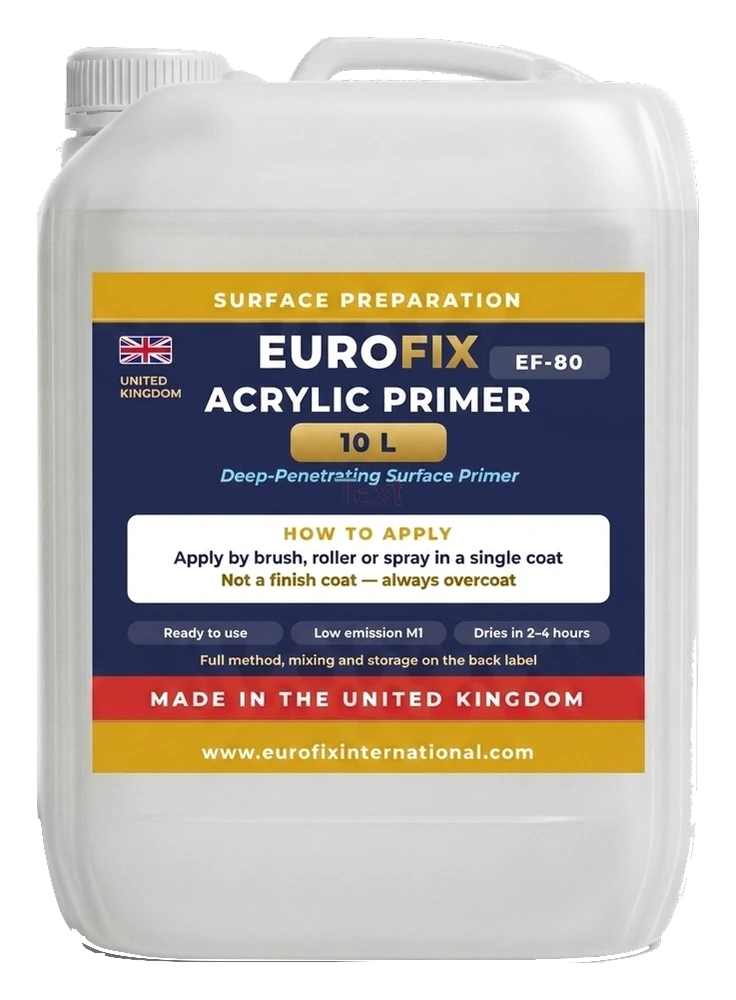
EuroFix Acrylic Primer
Deep penetrating acrylic primer to stabilize substrates, regulate absorption, and boost adhesion.
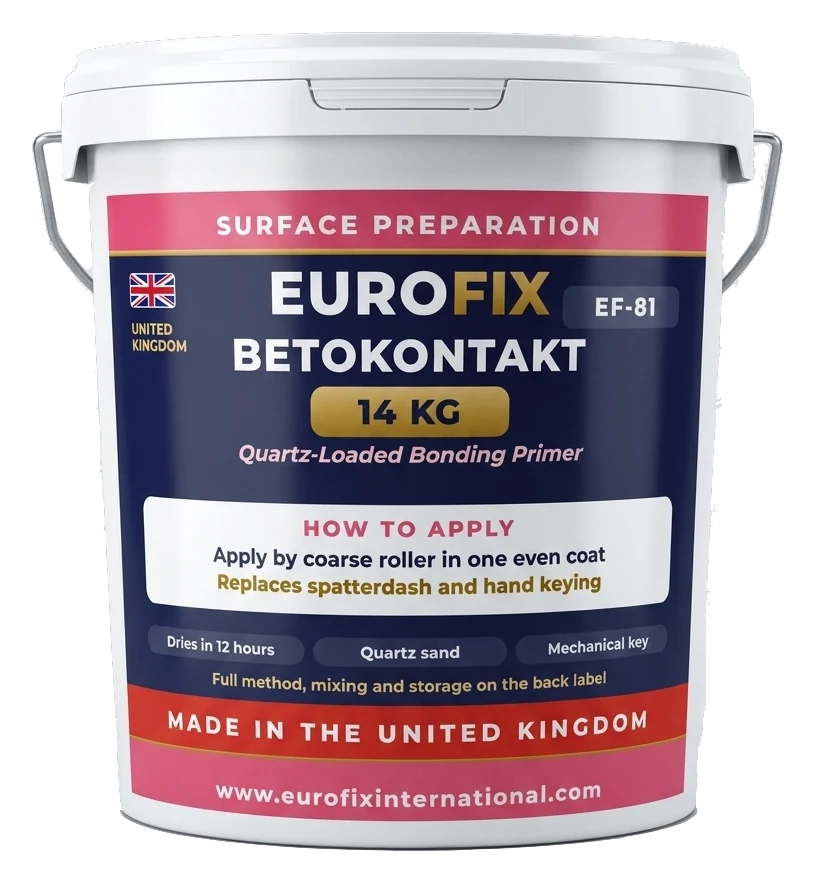
EuroFix Contact Primer
Quartz-sand modified bonding agent (Betokontakt) for smooth concrete surfaces.
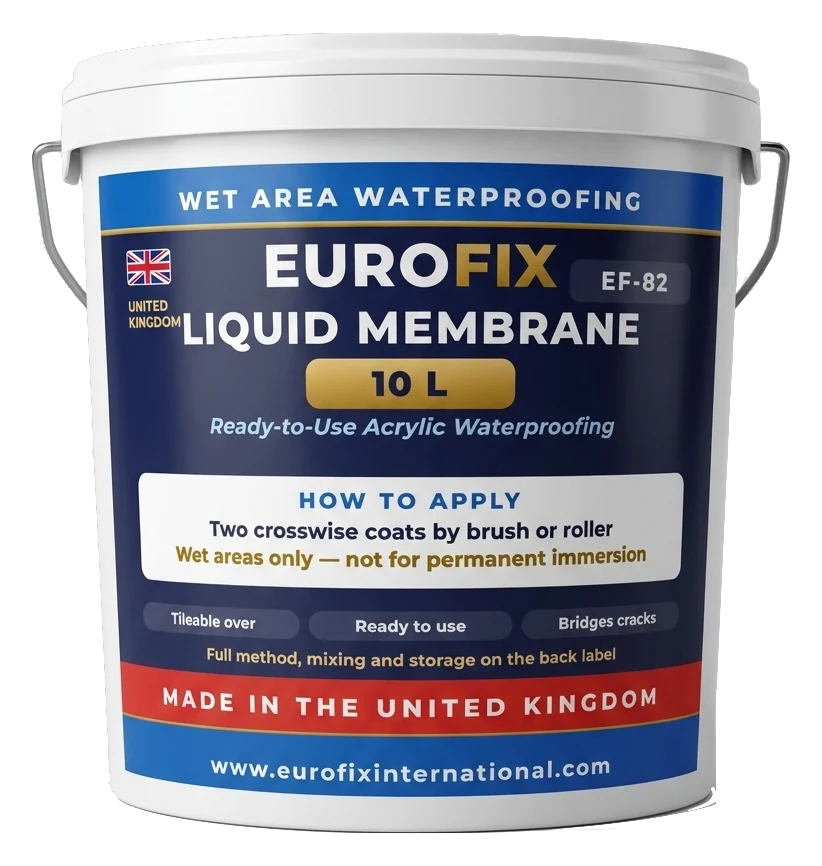
EuroFix Waterproofing Compound
Ready-to-use elastomeric liquid waterproofing membrane for wet areas, bathrooms, and balconies.
Frequently asked questions
Which repair mortar for concrete columns, beams and spalled concrete?
By class: a fibre-reinforced, non-shrink structural repair mortar classified EN 1504-3, class R3. EuroFix Repair Mortar R3 delivers ≥ 30 MPa compressive strength and is applied 5–40 mm per pass on columns, beams, spalled concrete and exposed-rebar zones. Mix ≈ 3.5–4 L of water per 25 kg bag.
How do I repair concrete with exposed reinforcement?
Break back to sound concrete (at least 10 mm deep, square edges), expose the bar 15–20 mm clear behind and clean it to bright grey metal, then bring the surface to saturated surface-dry with no standing water. Fill by compaction behind the bar first, in layers, and moist-cure for 24–48 hours per the datasheet. A visibly corroded bar section is the engineer's decision.
Do I need a bonding agent under repair mortar?
The concrete-repair guide notes that R3 mortar bonds to a saturated, roughened surface unaided in most cases. A bonding bridge or slurry is added on very smooth substrates or where the project specification requires one, and the mortar then goes on while the bridge is still wet.
Can I paint or render straight over the repair?
After the moist cure plus adequate drying (typically about a week, depending on thickness and weather). Before rendering, treat the repair as a new substrate: an absorption test and primer as needed.
What is EuroFix Repair Mortar R3 used for?
A fibre-reinforced, non-shrink structural repair mortar, classified EN 1504-3 — R3, for repairing and reconstructing concrete and façades. Designed for columns, beams, spalled concrete and exposed-rebar zones, it delivers ≥ 30 MPa compressive strength and reliable, code-compliant performance for structural works and tenders. Concrete columns and beams · Façades and spalled concrete surfaces · Exposed-rebar repair zones · Reconstruction of degraded concrete sections · Structural projects and certified tenders
What is the European classification of EuroFix Repair Mortar R3?
EuroFix Repair Mortar R3 is classified EN 1504-3 — R3. Declared certifications: CE · EN 1504-3 · R3.
What is the Mixing ratio of EuroFix Repair Mortar R3?
Mixing ratio: ≈ 3.5–4 L water per 25 kg bag.
What is the Compressive strength of EuroFix Repair Mortar R3?
Compressive strength: ≥ 30 MPa.
What is the Layer thickness of EuroFix Repair Mortar R3?
Layer thickness: 5–40 mm per pass.
What is the Reinforcement of EuroFix Repair Mortar R3?
Reinforcement: Fibre-reinforced.
What is the coverage of EuroFix Repair Mortar R3 per square metre?
Per mm thickness per m²: ≈ 1.8 kg/m²/mm · 20 mm layer: ≈ 36 kg/m² · 25 kg bag covers: ≈ 14 L fresh mortar
What pack size does EuroFix Repair Mortar R3 come in?
25 kg bag
How is EuroFix Repair Mortar R3 stored and what is its shelf life?
Store in original sealed bags in a dry place, raised off the ground on wooden pallets. Shelf life 12 months from the production date printed on the packaging.